Struggling to Breathe? Everything You Need to Know About Deviated Septum & Septoplasty
Living with a constantly blocked nose, mouth breathing, or recurring sinus infections can feel like carrying a heavy load on your head every single day. For many UAE residents, the culprit is a deviated nasal septum – a bend in the cartilage and bone that separates the nostrils. When conservative remedies fail, the gold-standard solution is Septoplasty, a short surgical procedure that straightens the septum and restores normal airflow.
This patient-focused guide explores deviated septum symptoms, the full Septoplasty journey, and what recovery looks like when you partner with a leading ENT clinic in Dubai.
Why Deviated Septum Problems Are Common in the Gulf
- Traffic and sports accidents: Minor nasal fractures from football, padel, and road incidents are frequent in the region’s active lifestyle.
- Genetics: Several population studies show congenital septal deviation rates as high as 35 % in Middle Eastern cohorts (Journal of Otolaryngology, 2023).
- Dry, dusty climate: Irritants magnify symptoms by inflaming already narrow nasal passages.
Because breathing issues can limit exercise tolerance and sleep quality, timely evaluation by an ENT specialist like Dr.Renjith Venkitachalam , is essential.
Classic Symptoms of a Deviated Septum
| Symptom | How It Feels | Why It Happens |
| One-sided nasal obstruction | Constant stuffiness on the same side, worse at night | Crooked septum narrows one nasal cavity |
| Frequent sinus infections | Facial pressure, post-nasal drip, foul breath | Blocked drainage openings trap mucus |
| Snoring or sleep apnea | Noisy breathing, unrefreshing sleep | Airflow turbulence vibrates soft tissues |
| Nosebleeds | Sudden drips of blood, often during wudu or exercise | Dry air hits exposed septal cartilage |
| Facial pain or headaches | Dull ache around eyes or forehead | Pressure builds in semi-blocked sinuses |
| External nasal deformity (sometimes) | Visible twist, hump, or tip deviation | Previous injury altered bony framework |
If two or more of these signals persist for 12 weeks despite saline rinses, allergy sprays, or antibiotics, schedule a nasal endoscopy at Ascent ENT Speciality Centre.
Getting Diagnosed at a Dubai ENT Clinic
An experienced Ear, nose and throat surgeon will typically:
- Review medical history and ask about prior trauma
- Perform anterior rhinoscopy with a bright headlight
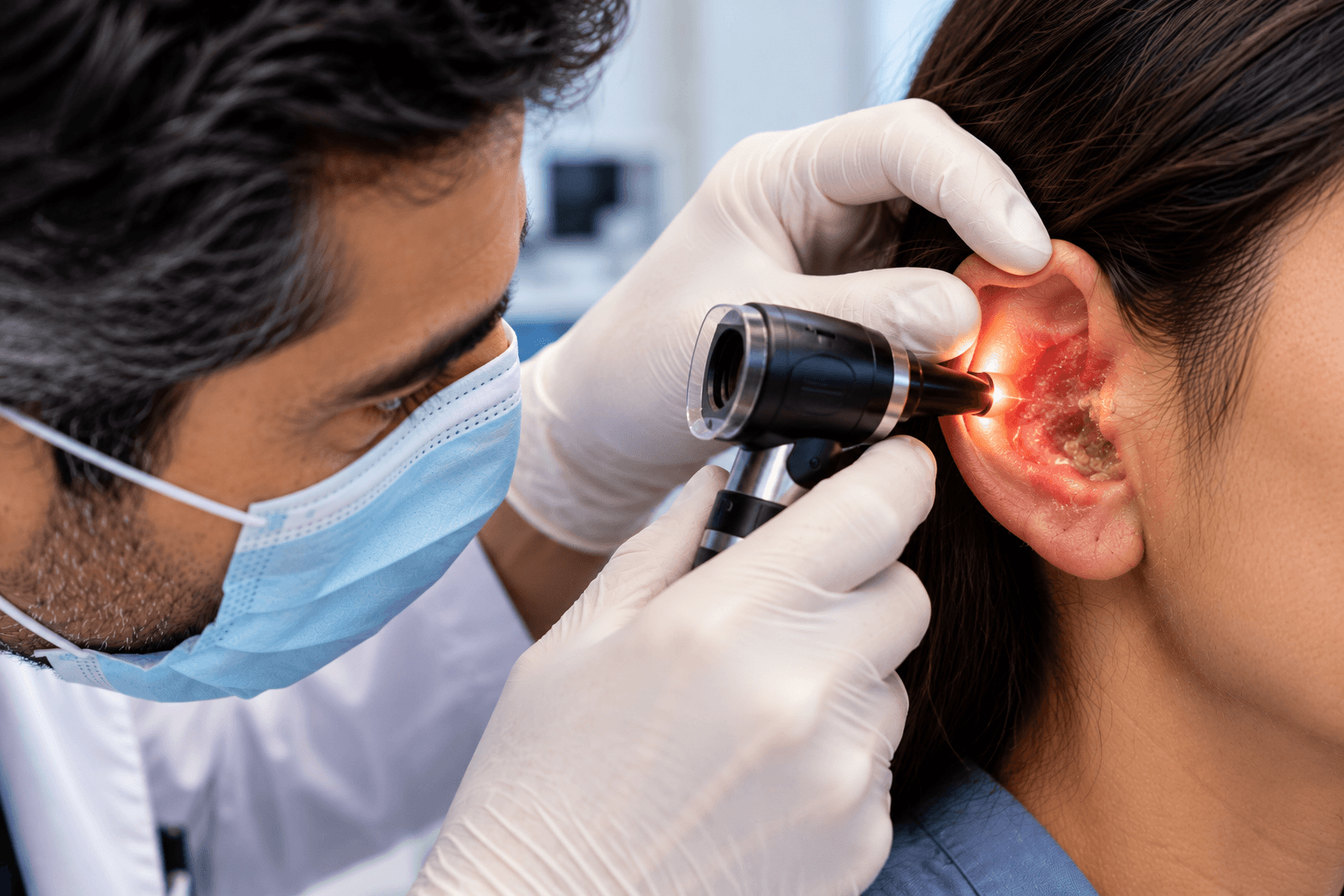
- Use flexible fiber-optic endoscopy to visualise the septum and turbinates
- Order a low-dose CT scan if Chronic sinusitis is suspected
Because Ascent houses advanced imaging and allergy testing under one roof, you can finish the assessment in a single morning visit.
Treatment Pathways: Medication First, Surgery Second
Initial management aims to reduce swelling around the deviation:
- Intranasal corticosteroid sprays (mometasone, fluticasone)
- Saline irrigations two times daily
- Short course of decongestants (limited to five days)
- Allergy immunotherapy when environmental triggers are confirmed
When obstruction remains bothersome after six to eight weeks of treatment, septoplasty becomes the definitive option. If you also wish to refine the external shape of the nose, the procedure can be combined with functional rhinoplasty in Dubai (septorhinoplasty).
Septoplasty Explained
Septoplasty is performed under general anesthesia and usually lasts 45-60 minutes:
- A hidden incision is made inside the nostril.
- The surgeon lifts the mucosal lining, resects or repositions deviated cartilage and bone, then replaces the lining.
- Dissolvable stitches secure the tissue; silicone splints may be inserted to support healing.
Because no external cuts are required, there is minimal bruising and no visible scar.
Same-Day Discharge
Most patients leave the hospital within six hours, driven home by a family member. Ascent’s day-surgery model minimizes costs and allows recovery to start in your own bed.
Recovery Timeline: Week by Week
| Phase | Time Frame | What You May Experience | Care Tips |
| Early healing | Day 1-3 | Nasal stuffiness, mild pressure, small blood-tinged drip | Keep head elevated, apply cold compress over cheeks, take prescribed analgesics |
| Splint period | Day 4-7 | Breathing improves gradually, internal splints still in place | Continue saline sprays, avoid blowing nose, gentle walks okay |
| Splint removal | Day 7 | Instant feeling of open airway | Surgeon removes splints at clinic visit |
| Consolidation | Week 2-4 | Occasional crusts, light sneezing | Use saline irrigations; apply antibiotic ointment if advised |
| Final remodeling | Month 2-3 | Normal airflow, exercise back to baseline | Resume contact sports after surgeon approval |
More than 90 % of Septoplasty patients report significant improvement by the third postoperative month (American Rhinologic Society audit, 2024).
Practical Recovery Tips for the UAE Climate
- Run a bedside humidifier to counteract AC-dry air.
- Limit desert outings for two weeks; dust can irritate healing tissue.
- Perform ablution (wudu) gently, letting water trickle rather than forcefully sniffing.
- Drink 2.5 L of water daily-hydrated mucosa heals faster.
Risks and How They Are Managed
All surgery carries some risk, but serious complications are rare when performed by an experienced ENT surgeon
- Bleeding requiring re-packing (1-2 %)
- Infection controlled with oral antibiotics (<1 %)
- Septal perforation (<0.5 %)
- Change in sense of smell (usually temporary)
At Ascent ENT , stringent sterile protocols, image-guided instruments, and meticulous follow-up reduce these odds even further.
Septoplasty vs. Rhinoplasty: Know the Difference
| Feature | Septoplasty | Cosmetic Rhinoplasty | Septorhinoplasty |
| Goal | Improve breathing | Alter nose appearance | Both airway and aesthetics |
| Incisions | Inside nose | Often across columella | Both internal and external |
| Insurance coverage | Frequently covered | Usually not | Partially covered |
| Recovery bruising | Minimal | Noticeable under-eye bruises | Moderate |
If esthetics matter as much as airflow, discuss a combined plan so you undergo only one anesthesia event and one recovery period.
Cost and Insurance Considerations
- Medical necessity: When obstruction is documented, major UAE insurers typically cover septoplasty hospital and surgeon fees.
- Out-of-pocket items: Pre-operative labs, cosmetic components, and extra nights of stay may not be covered.
- Always obtain a pre-authorization letter to avoid surprises.
For transparent quotes, Ascent’s billing team will liaise with your insurer before scheduling a surgery date.
Choosing the Right ENT Specialist in Dubai
When evaluating a clinic, look for:
- Well trained and experienced rhinologists with a high annual volume of septoplasties
- Availability of on-site CT scanning and audiology (fewer external appointments)
- Multidisciplinary team including speech therapist in Dubai for post-operative voice care if needed
- Clear, written aftercare instructions and 24-hour helpline
Ascent ENT Dubai ticks each of these boxes and more, backed by a pedigree of successful outcomes and international patient testimonials. Learn more about our comprehensive ENT services at Ascent ENT Clinic.
Take the Next Breath-Easier
A Deviated septum does not have to dictate your sleep, workouts, or social confidence. With modern day-surgery techniques, recovery is quicker than ever, and the benefits often last a lifetime.
If you recognise the symptoms outlined above, book a consultation with an ENT specialist at the best ENT hospital in Dubai today. Our expert ENT doctors will assess your condition using advanced diagnostic tools and recommend the most effective treatment plan to improve your breathing and overall quality of life. Call today or use the appointment form on the Ascent website. The path to effortless breathing could be just a few weeks away.